
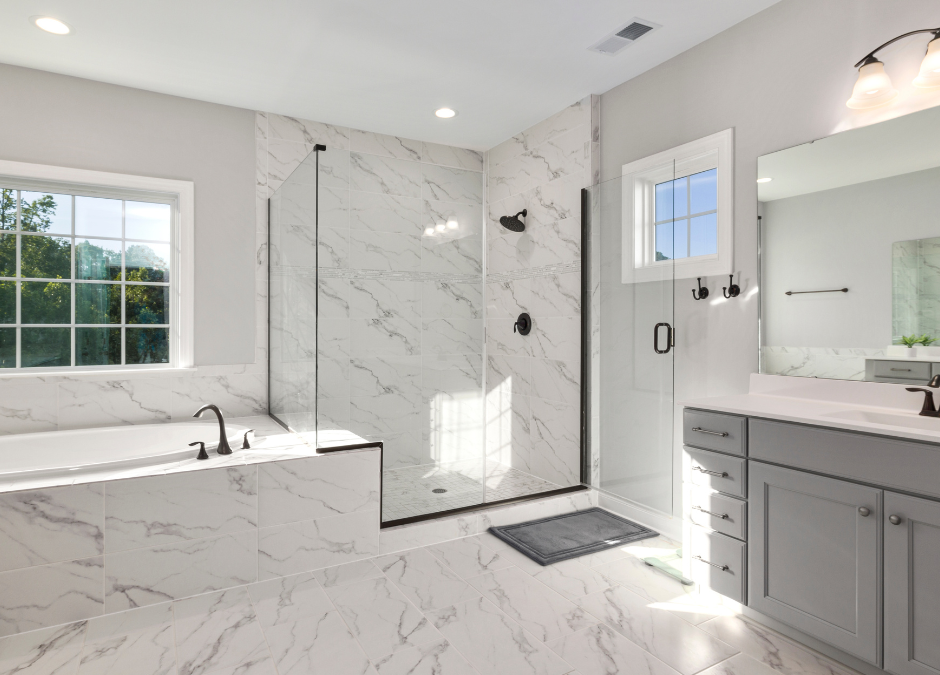
The alarm goes off, the house is still dark, and your bare feet hit tile that feels like it came straight out of the freezer. Then the shower sputters along with water pressure that barely rinses the shampoo out. It’s not the gentlest way to start a winter day.
Across Louisville and Southern Indiana, colder months bring damp air, drafty rooms, and mornings when getting out from under the covers takes real willpower. Your bathroom is often the first room you step into each day, so it has a big say in how that day begins.
The good news is that a spa bathroom doesn’t have to be a far-off luxury. A few well-chosen features can turn a cold, rushed routine into something calm and warm. In this guide, we’ll walk through the five upgrades that make the biggest daily difference:
- Heated floors
- Walk-in showers with rainfall heads
- Soaking tubs
- Towel warmers
- Better ventilation
For each one, we’ll look at comfort, budget, and long-term value, so you can decide which features fit your home, your routine, and your plans for the future.
Why Your Bathroom Shapes Your Whole Morning
Most of us spend only a few minutes in the bathroom each morning. Those minutes carry a lot of weight, though. A warm, well-designed space helps you wake up gently. A cold, cramped one has you rushing just to get out.
Winter makes the gap even wider. Tile floors stay cold. Mirrors fog up. Towels feel damp and chilly. Older plumbing can struggle to deliver strong, steady water flow, especially when more than one person is getting ready at once.
A spa bathroom fixes these small daily frustrations. The goal isn’t to make the room fancy for its own sake. It’s to make it work better for you, every single day, in every season.
The 5 Spa Features That Make the Biggest Difference
Each feature below solves a specific winter problem. Some deliver comfort right away, while others protect your home for years to come. Here’s how they compare.
1. Heated Floors: Say Goodbye to Cold Tile
Radiant floor heating sits beneath your tile and warms the surface from below. Instead of tiptoeing across the room, you step onto floors that feel cozy and inviting.
Comfort: This is often the feature homeowners say they’d never give up. Warm floors also take the chill out of the whole room, because heat rises gently from the ground up. Many systems come with programmable thermostats, so floors can be warm before you even wake up.
Budget: Most bathrooms use electric radiant mats, which work well for smaller spaces and are easier to install during a remodel. Hydronic systems, which run warm water through tubing, are more common in larger projects or whole-home setups. Because heating goes in under the tile, it’s most cost-effective to add when you’re already replacing the floor.
Long-term value: Radiant heat has no moving parts to wear out, and a quality system can last for decades. A programmable thermostat keeps energy use in check by running the heat only when you need it.
What this looks like in practice: Picture a family with two kids getting ready for school on a frosty January morning. The floor warms automatically at 6:00 a.m., so by the time everyone stumbles in, the room already feels comfortable. No more bath mats piled up for warmth and no more cold feet.
2. Walk-In Showers With Rainfall Heads: Strong, Soothing Water
A walk-in shower with a rainfall head is the centerpiece of many spa bathrooms. Water falls straight down like a warm summer rain, covering you evenly from head to toe.
Comfort: Rainfall heads feel relaxing and immersive. Pair one with a handheld sprayer, and you get the best of both: a soothing soak plus a practical tool for rinsing hair, cleaning the shower, or bathing kids and pets. A built-in bench and recessed niches for shampoo add everyday ease.
Budget: Costs depend on the size of the shower, tile choices, glass enclosure, and fixtures. A curbless, zero-threshold design takes more careful planning and floor work, but it delivers a seamless look and easier access.
Long-term value: Walk-in showers are one of the most popular upgrades for buyers, and they suit every stage of life. A low or curbless entry makes it easier to age in place, which matters if you plan to stay in your home for years.
Here’s the important part: a rainfall head can’t fix weak water pressure on its own. In fact, a large showerhead can make low pressure feel even worse. That’s why it’s smart to have your plumbing evaluated during design. Updated supply lines, a properly sized valve, or a pressure-balancing system can all make a big difference. When the plumbing and the fixtures are planned together, you get the strong, steady flow you were hoping for.
3. Soaking Tubs: A Place to Truly Unwind
After a cold, gray day, few things feel better than sinking into a deep tub of warm water. A soaking tub is built for exactly that, with more depth than a standard bathtub so you can relax fully submerged.
Comfort: Freestanding tubs make a striking focal point, while built-in versions can tuck neatly into an alcove or under a window. Ergonomic shapes support your back and neck for a truly restful soak.
Budget: Freestanding tubs often cost more and need a sturdy floor, especially heavier materials like cast iron or stone resin. You’ll also want to factor in a matching tub filler and placement for plumbing lines.
Long-term value: A soaking tub adds beauty and a sense of luxury, but its value depends on your lifestyle. If you love long baths, it’s worth every penny. If you rarely take one, that space may serve you better as a larger shower.
One detail many homeowners miss: your water heater needs to keep up. A deep tub uses far more hot water than a standard one. During design, it’s worth checking whether your current water heater can fill the tub without running cold halfway through.
4. Towel Warmers: Small Upgrade, Big Payoff
A towel warmer is one of the easiest ways to bring hotel-style comfort into your daily routine. Step out of the shower, wrap yourself in a warm towel, and suddenly a chilly morning doesn’t feel so harsh.
Comfort: Beyond the instant cozy factor, towel warmers dry towels faster between uses. That means fewer musty smells and towels that stay fresher longer.
Budget: This is one of the most budget-friendly spa upgrades. Plug-in models are simple to add, while hardwired versions offer a cleaner look with no visible cords. Many include timers, so they warm up right when you need them.
Long-term value: Because they help towels dry fully, warmers can reduce how often you need to wash and replace them. They also add a little extra warmth to the room. For the cost, it’s hard to find a feature that delivers more daily delight.
5. Better Ventilation: The Feature That Protects Everything Else
Ventilation isn’t glamorous, but it may be the most important upgrade on this list. Hot showers and long baths create a lot of steam. Without a way to remove it, that moisture lingers on mirrors, walls, and ceilings.
Comfort: A properly sized exhaust fan clears fog quickly, so you’re not wiping the mirror every few minutes. Quiet models run without the loud rattle older fans are known for.
Budget: Upgrading a fan is a modest cost, especially during a larger remodel. Look for features like humidity sensors that turn the fan on automatically, and timers that keep it running after you leave.
Long-term value: Here’s where ventilation earns its keep. Trapped moisture can lead to mold, peeling paint, warped cabinets, and damage you can’t see behind the walls. Strong ventilation protects your investment in tile, cabinetry, and finishes. In a region with humid summers and damp winters, it’s essential.
The fan must vent to the outdoors, not into the attic. A fan sized to your bathroom’s square footage, with ductwork that carries moisture fully out of the house, keeps your spa bathroom healthy for years.
How to Weigh Comfort, Budget, and Long-Term Value
Not every bathroom needs every feature. The right mix depends on how you use the space and how long you plan to stay. Here’s a simple way to think it through.
Start With Your Biggest Daily Frustration
Ask yourself what bothers you most each morning. If it’s cold floors, heated floors move to the top of the list. If it’s a weak, sputtering shower, plumbing updates and a walk-in shower come first. Solving your real pain point gives you the most satisfaction for your budget.
Bundle Features That Share the Same Work
Some upgrades are far more cost-effective when done together. Heated floors make sense when you’re replacing tile anyway. Plumbing updates fit naturally with a new shower. Planning these as one project avoids tearing out finished work later.
Think About Your Timeline
If you plan to stay in your home for many years, invest in comfort and accessibility, like a curbless shower and heated floors. If you might sell in the next few years, prioritize features buyers love, such as a spacious walk-in shower and quality ventilation.
Common Mistakes to Avoid
Even the best features can fall short without careful planning. Here are a few pitfalls we see often, along with how to avoid them.
Choosing a rainfall head without checking water pressure. The fix: evaluate plumbing during design so fixtures and supply lines work together.
Adding a deep tub without considering hot water capacity. The fix: confirm your water heater can handle the volume, or plan an upgrade.
Skipping ventilation to save money. The fix: treat a properly sized, outdoor-vented fan as a must-have, not an extra.
Installing heated floors without a programmable thermostat. The fix: choose a thermostat with scheduling so floors warm on your routine and save energy the rest of the time.
Designing for looks alone. The fix: balance beautiful finishes with practical choices, like slip-resistant shower floors and smart storage.
Your Spa Bathroom Planning Checklist
Before you start, run through these questions:
- What’s the one thing I’d change about my bathroom mornings?
- Do my floors, shower, or towels feel cold in winter?
- Is my water pressure strong and steady?
- Can my water heater handle a soaking tub?
- Does my fan clear steam quickly and vent outdoors?
- How long do I plan to stay in this home?
Your answers will point you toward the features that matter most.
How Whitis Design-Build Brings It All Together
A spa bathroom works best when every piece fits: the plumbing, the heating, the ventilation, and the finishes. That’s where design-build makes a real difference.
At Whitis Design-Build, one team handles your project from the first sketch to the final walkthrough. We look at your existing plumbing, check your water heater, plan your ventilation, and guide you through every selection. Because design and construction live under one roof, nothing gets lost between the plan and the build. You get a bathroom that looks beautiful and works the way you need it to.
Start Your Mornings Warmer
The right spa features can change how every winter day begins. Heated floors chase away the chill. A walk-in shower with strong, steady water helps you wake up refreshed. A soaking tub, a warm towel, and a clear mirror turn a rushed routine into a moment you look forward to.
Start with your biggest daily frustration, bundle the upgrades that share the same work, and plan for how long you’ll call your home your own.
Imagine stepping onto warm floors this winter. Reach out to Whitis Design-Build for a free design consultation, and let’s create a spa bathroom that makes every morning feel a little more like a retreat.